

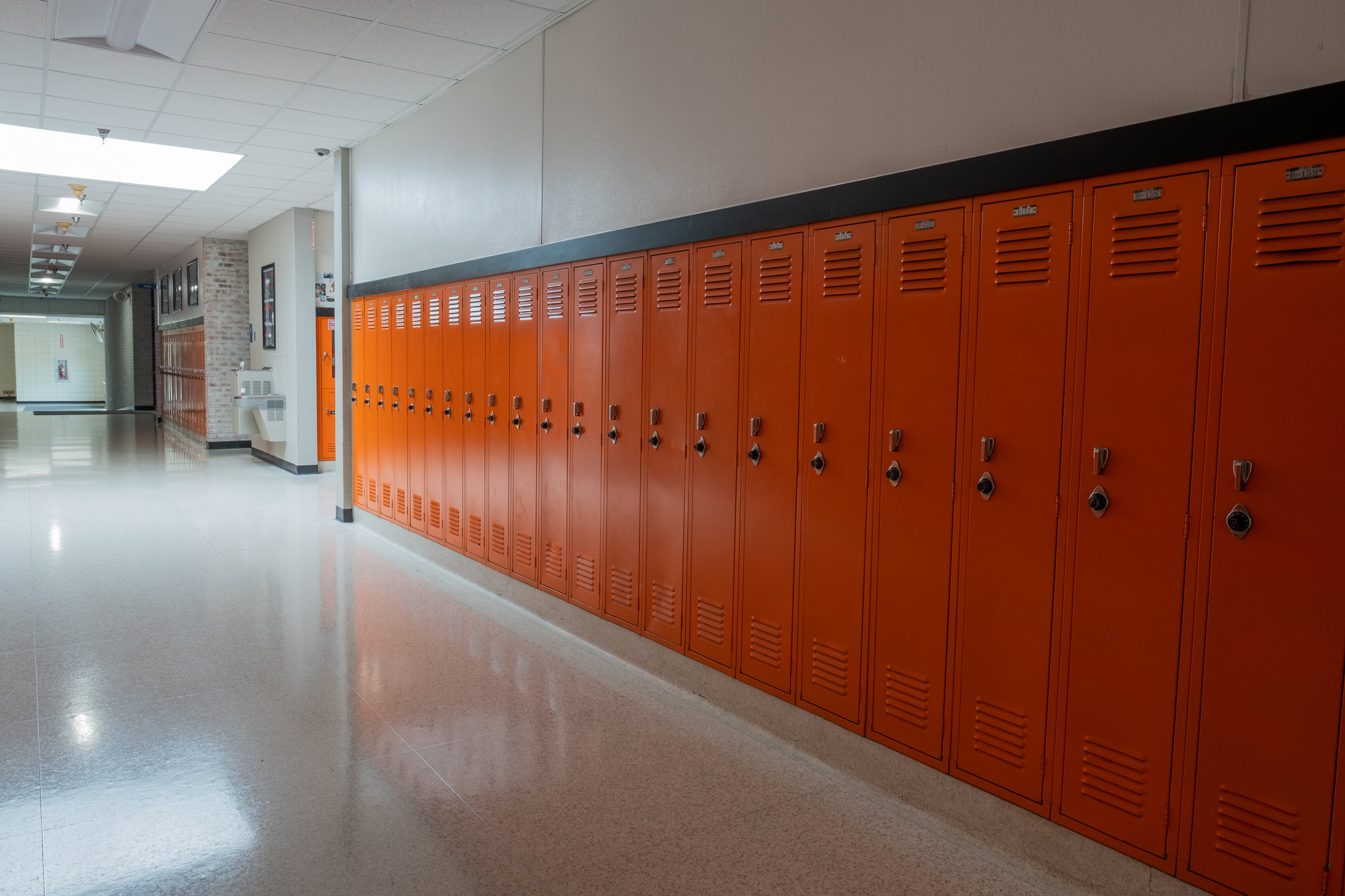
Traffic Patterns in a School Are Uniquely Demanding
A school corridor experiences short, intense bursts of traffic between classes rather than the steady, spread out flow of a typical office or retail space. That pattern puts real stress on tile wear ratings, since a tile has to hold up to hundreds of students moving through a hallway in a matter of minutes, several times a day, for a full academic year.
PEI rating, which measures a tile's resistance to surface wear from foot traffic, is one of the more useful specifications to check when comparing options for a school corridor versus a lower traffic space like an office or a single classroom. A tile rated for lighter commercial use might be perfectly suitable for an administrative area but fall short in a main hallway carrying the bulk of the building's daily movement.
Slip Resistance Matters More With Kids in the Mix
Wet floors from rain, snow, spilled drinks, or gym class runoff create a slip risk in any commercial building, but that risk carries different weight in a building full of children moving quickly between classes. A tile's dynamic coefficient of friction rating gives a measurable way to compare slip resistance between products, rather than relying on how a tile feels underfoot when dry in a showroom.
This becomes especially relevant near entrances, cafeterias, gymnasiums, and any space adjacent to water fountains or sinks, where moisture is a near constant possibility throughout the school day. Specifying a higher traction tile in these zones, even if the rest of the building uses a different product, is a reasonable way to manage that risk without redesigning the entire facility's flooring plan.
Maintenance Schedules Are Different for Schools
Most schools clean on a tight schedule built around custodial staff availability rather than around what any individual flooring product ideally needs, which means ease of maintenance is a genuinely practical specification rather than a convenience. A tile that requires specialized cleaning products or frequent resealing adds real time and cost to a maintenance routine that is often already stretched thin.
Porcelain tile with a low porosity rating tends to hold up well to standard commercial cleaning equipment and routine mopping without needing the kind of specialized care that some natural stone or more porous tile products require. This is worth discussing directly with whoever manages facilities maintenance before a product is finalized, since their day to day routine is what will actually determine how the floor looks in five years.
Noise and Acoustics Play a Role Too
A hard tile surface reflects sound rather than absorbing it, and in a busy school corridor that can compound the noise of students moving between classes into something genuinely disruptive for nearby classrooms. This is not usually the first thing a facilities team thinks about when comparing tile products, but it is a real factor in how a finished space actually feels once it is filled with people every day.
Textured or matte finish tiles tend to diffuse sound slightly better than a highly polished glossy finish, and pairing tile corridors with acoustic treatments elsewhere in the building, such as ceiling tile or wall panels, can offset some of the reflective quality tile naturally has. This is worth raising with an architect or design team early in a renovation, since acoustic planning works best when it is considered alongside flooring rather than after the fact.
Budget Planning Benefits From Phased Thinking
School renovation budgets are often tied to a fiscal year or a bond cycle, which makes it worth discussing whether a tile project can be phased across multiple summers rather than requiring a single large purchase all at once. Working with a supplier who can hold consistent product availability across a multi year phase helps avoid a mismatched patchwork of tile if a school cannot complete an entire building's flooring in one project.
This kind of phased planning is a conversation worth having early, since not every tile line stays in production indefinitely, and a facilities team wants to know upfront whether a chosen tile can realistically be sourced again for a second or third phase down the road. Raising this question before specifying a product avoids a difficult situation partway through a multi year renovation plan.
Specifying tile for a school building involves a different set of priorities than a typical commercial project, and getting the wear rating, traction, and maintenance profile right protects both the budget and the people using the building every day. CarpetWorks works with school facilities teams and administrators across the region on tile projects built for real classroom and corridor traffic.
Explore our tile flooring options suited for educational facilities, or visit us at East Hartford, CT. We support schools and districts throughout New Haven, Waterbury, Hartford, East Hartford, West Hartford, Middletown, and Manchester, CT, and our team can help you plan a tile specification that fits your building and your maintenance routine. Contact us to talk through your facility's needs.


