

Mobility Equipment Changes What Tile Can Actually Support
Residents and patients in these facilities frequently rely on walkers, wheelchairs, and rolling medical equipment, all of which move very differently across a floor than ordinary foot traffic. A tile surface with even a slight texture mismatch or an uneven grout line can create resistance that makes a walker harder to push or a wheelchair harder to self propel, which becomes a genuine daily friction point rather than a minor inconvenience.
Large format tile with minimal grout lines reduces the number of seams a wheeled device has to roll across, which matters more here than in almost any other commercial setting. This is worth specifying clearly at the design stage, since a beautiful tile pattern with heavy grout lines can quietly work against the mobility needs of the exact population using the space every day.
Slip Resistance Is a Constant, Not Occasional, Concern
A dynamic coefficient of friction rating matters in any commercial space, but in a health care setting it applies to nearly every square foot of the building rather than just entries and wet zones. Spilled liquids, cleaning solution residue, and the simple reality of an aging or medically fragile population moving through hallways all day raise the stakes on traction in a way that is different from a typical office or retail environment.
This is a specification worth verifying directly against manufacturer data rather than assuming a tile is appropriate because it looks similar to one used elsewhere in a comparable building. A facilities team is well within reason to ask a flooring supplier for documented traction ratings before finalizing a product for patient corridors, therapy rooms, or common areas.
Infection Control Standards Affect Grout and Seam Choices
Health care facilities operate under cleaning and infection control protocols that go well beyond standard commercial maintenance, and tile grout is one of the more overlooked places where those standards actually get tested. Porous or heavily textured grout can hold bacteria and residue in ways that are difficult to fully sanitize with standard cleaning equipment, even when staff are following every protocol correctly.
Epoxy grout, which is significantly less porous than standard cementitious grout, is worth discussing specifically for these spaces, along with minimizing the total linear footage of grout lines through tile size and layout choices. This is a detail that a facility's infection control team may want to be part of the conversation on, since their standards often go beyond what a general contractor would default to without being asked.
Acoustic and Visual Comfort Matter for Long Term Residents
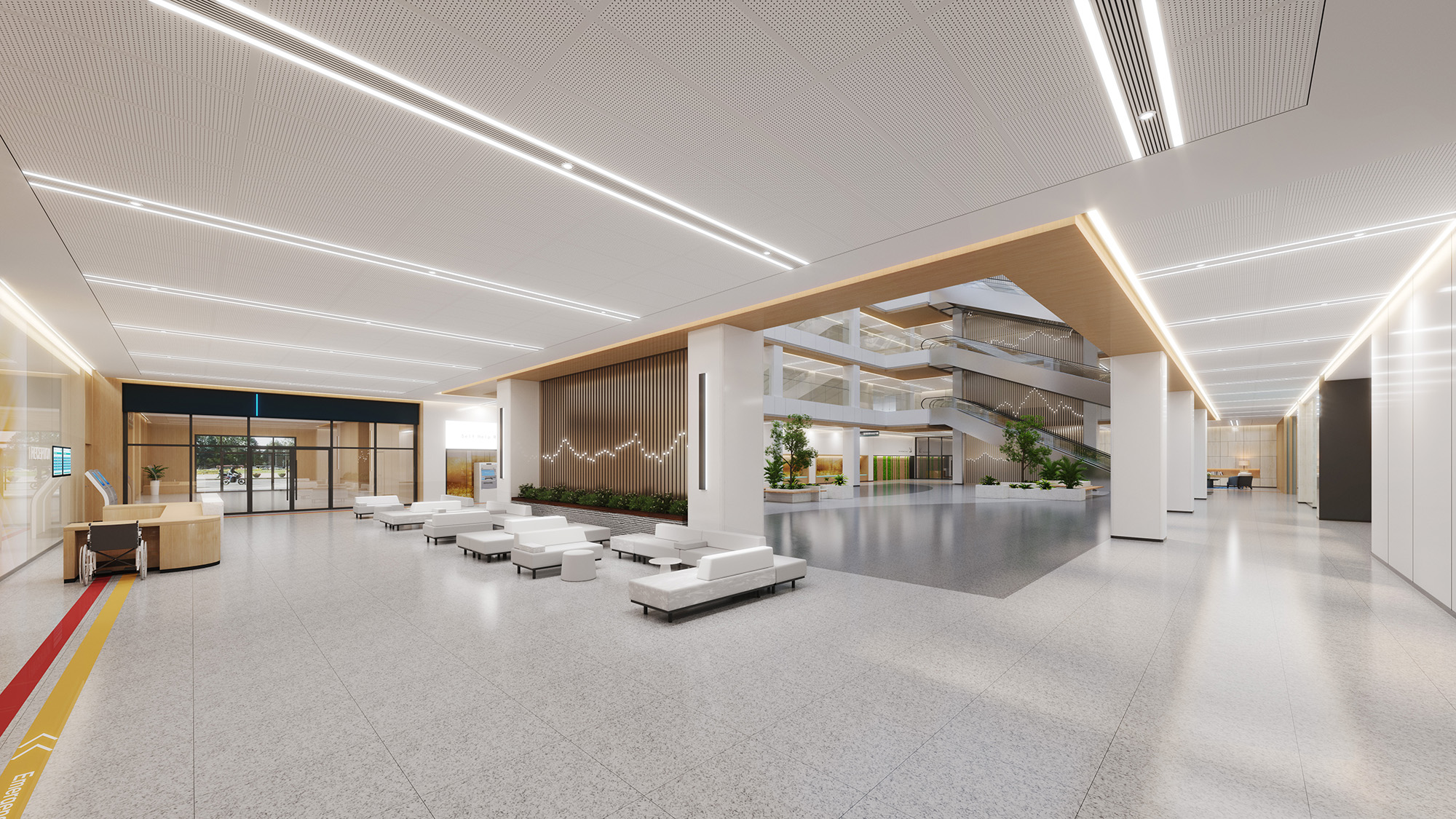
Assisted living residents and long term patients spend far more time in these spaces than a typical commercial visitor, which means the acoustic and visual qualities of a floor have a cumulative effect that is worth planning for rather than treating as secondary to durability. A highly reflective, glossy tile can create glare that is genuinely uncomfortable for residents with vision sensitivity, and hard surfaces throughout a building can compound noise in ways that affect rest and comfort over time.
A matte or softly textured tile finish reduces glare while still meeting durability and cleanability standards, and pairing tile corridors with acoustic ceiling treatments elsewhere in the building can offset some of the reflective sound quality tile naturally carries. This is worth raising with a design team early, since it affects resident experience in a facility where people are living, not just visiting.
Planning for Long Term Supply and Consistency
Health care facilities often renovate in phases due to the operational challenge of taking spaces offline while patients or residents are still present in the building. Working with a supplier who can commit to consistent product availability across a multi phase project protects a facility from ending up with a mismatched patchwork of tile between wings completed years apart.
This is worth discussing at the very start of a project, since confirming that a chosen tile line will realistically still be available for a second or third phase avoids a difficult situation partway through a long term renovation plan. A facilities team benefits from raising this question before a product is finalized rather than discovering a discontinuation midway through construction.
Specifying tile for a health care or assisted living facility involves priorities that go beyond what a typical commercial project requires, and getting the traction, grout, and maintenance details right protects both residents and daily operations. CarpetWorks works with health care facilities and senior living communities across the region on tile projects suited to real clinical and residential care environments.
Explore our tile flooring options suited for health care and assisted living spaces, or visit us at East Hartford, CT. We support facilities throughout New Haven, Waterbury, Hartford, East Hartford, West Hartford, Middletown, and Manchester, CT, and our team can help you plan a tile specification built around your residents and your operations. Contact us to talk through your facility's project.


