

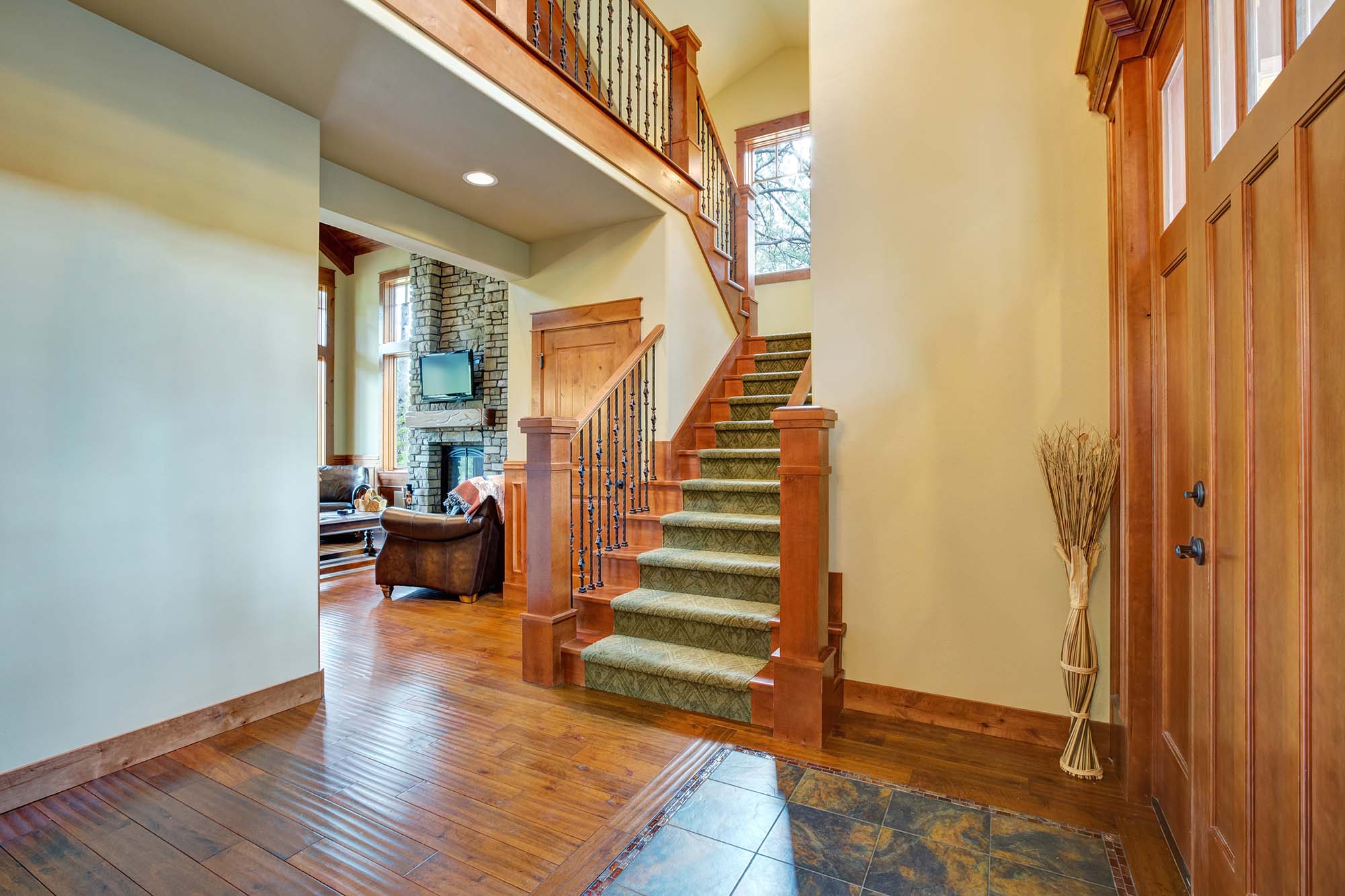
A lot of the housing stock across Connecticut colonial neighborhoods was built to stair widths and tread depths that would not meet a current building code, which is exactly why a standard off the shelf runner so often looks wrong or fits poorly once it is actually laid down. Getting a runner right on one of these staircases takes a slightly different approach than picking one for a newer, more standardized home.
Why Standard Runner Widths Do Not Always Work
Modern stair runners are typically manufactured to fit staircases in the 36 to 42 inch width range, since that reflects current code minimums for new construction. Many older Connecticut colonials have staircases narrower than that, sometimes by several inches, which means a standard runner either overhangs the treads or has to be custom trimmed and bound to actually fit.
This is worth measuring before falling in love with a specific runner style, since the width of the stair itself, not just the look of the rug, determines what will actually work. A runner that is cut and bound to the exact width of an existing staircase almost always looks more intentional than one that has been squeezed onto a stair it was not sized for.
Winder Stairs Need a Different Kind of Runner Entirely
Many older colonials use winder stairs at a turn in the staircase, where the treads are pie shaped instead of rectangular, and a standard straight runner simply cannot follow that shape without bunching or leaving gaps. This is one of the more common reasons a runner project on an older home takes more planning than it would in a newer house with a straight staircase.
A runner intended for a winder section typically needs to be custom fit piece by piece, or the homeowner needs to choose a style with enough flexibility in its construction to be worked around the turn without looking pieced together. This is a detail worth raising during the initial conversation about a project, since it changes both the material choice and the installation approach from the very beginning.
Tread Depth Changes What Pile Height Actually Works
Older staircases frequently have shallower tread depth than current construction, which means every fraction of an inch of rug pile actually reduces the usable footing space on each step. A thick, plush runner that would feel great on a flat hallway floor can quietly turn a already shallow tread into a less safe one once it is factored into the walking surface.
A lower pile, tightly woven runner preserves more of the tread's actual depth while still providing cushioning and noise reduction on the stairs. This tends to matter more on an older colonial staircase than it would on a newer, deeper tread staircase, simply because there is less depth to spare in the first place.
Securing a Runner Without Damaging Original Wood
Historic wood treads and risers are often original to the house, and driving traditional tack strips or nails into them to secure a runner can cause damage that is difficult to reverse. Stair rods, tension based hold down systems, and specialty adhesives rated for finished wood all offer ways to secure a runner without permanently altering original material.
Choosing the right hold down method usually depends on how the stairs were finished and how much the homeowner wants to preserve the original wood underneath. This is worth discussing before installation, since removing an improperly secured runner later can sometimes cause more damage to old wood than a well chosen hold down method would have in the first place.
Get a Runner That Actually Fits Your Staircase
A runner project on an older colonial staircase almost always benefits from being measured and planned around the specific quirks of that staircase rather than ordered off the shelf. CarpetWorks can help measure width, plan around winders, and choose a pile height and hold down method suited to an original wood staircase.
Explore our area rug and custom runner options, or visit us at East Hartford, CT. We work with homeowners throughout New Haven, Waterbury, Hartford, East Hartford, West Hartford, Middletown, and Manchester, CT on staircases of every shape and age. Contact us to talk through your staircase project.


