

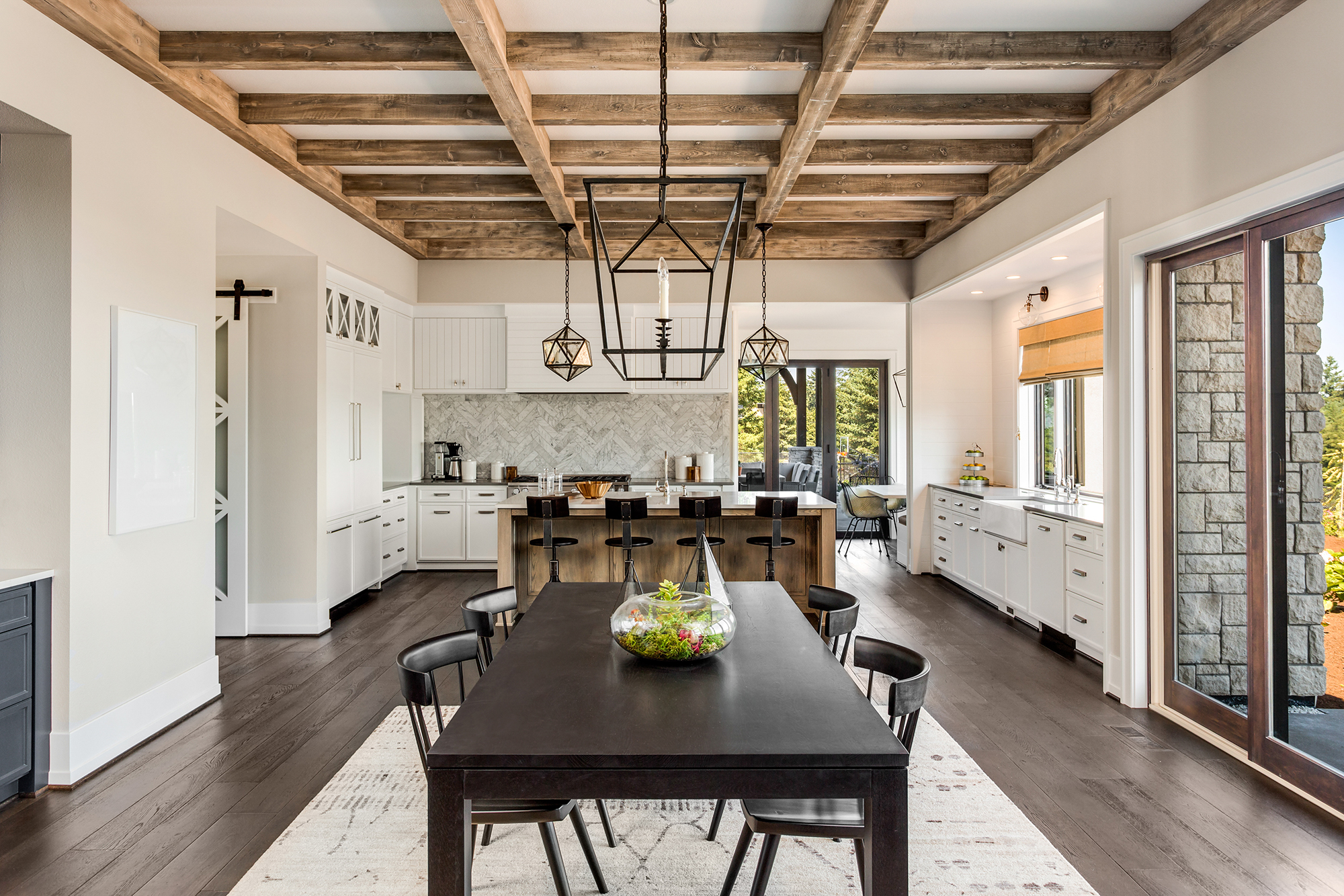
A dining rug is basically a performance surface: chair legs scrape it, crumbs attack it, and spills happen like it’s a hobby. At CarpetWorks, we see most “I hate this rug” complaints trace back to sizing math and pile/pad choices. If you’re shopping near East Hartford, CT, use these specs to choose a rug that looks intentional and functions like it should.
Step 1: Rug size math
Rule: the rug must extend far enough that chairs stay on the rug even when pulled out.
Minimum clearance: 24 inches from the edge of the table on all sides.
Better clearance (if space allows): 30 inches.
Why? Most dining chairs need ~18–24 inches of travel when someone sits down. If the chair back legs fall off the rug mid-motion, you’ll feel the “catch” and hear the scrape.
Quick sizing table (most common):
4–6 seat table (about 36" x 60"): usually 8' x 10' rug
6–8 seat table (about 40" x 84"): usually 9' x 12' rug
Round table 48"–54": typically 8' round
Round table 60": typically 9' round
Pro check: mark your table footprint with painter’s tape, then tape the rug boundary (table size + 24–30 inches). Walk the chair pull-out path. If it works on tape, it works in life.
Step 2: Pile height and construction
Dining rugs need low pile and tight construction.
Best pile height range: 0.25" to 0.4" (¼" to ⅜")
Lower than ¼" can feel thin unless paired with the right pad
Higher than ½" increases chair drag and “divot” marks
Best constructions for dining:
Low-pile cut pile (dense)
Flatweave (very chair-friendly)
Tight, short loop (works, but consider snag risk with pets)
Avoid (for most dining rooms):
High pile / shag (chair legs sink)
Loose loop (snag city)
Viscose-heavy “silk look” (water marks + flattening)
Step 3: Chair legs, glides, and pad specs
Even a perfect rug can feel awful with the wrong pad.
Rug pad thickness: ¼" is the sweet spot for dining.
Thick pads make chairs feel like they’re climbing a hill.
Thin pads can slip or feel hard.
Pad type: felt + rubber combo is usually best on hard floors.
Felt provides cushioning
Rubber provides grip
(If your floor is tile, choose pads designed not to discolor or react with the surface.)
Chair glides matter:
Hard plastic glides + low pile = smoother movement
Sharp or worn glides will chew fibers
If your chairs are heavy, swap to wider glides to spread load.
Step 4: Fiber choice for spills and crumbs (real-life durability)
Dining rooms are stain labs.
Best “liveable” fibers:
Solution-dyed nylon (great stain resilience, holds color)
Wool blends (good performance if treated, hides crumbs with texture)
Budget-friendly, practical:
Polypropylene (stain resistant, can flatten faster)
Be cautious with:
Viscose / bamboo silk (stains, water marks, crushes)
High-shine yarns (show traffic lanes)
Step 5: Aesthetic rules that also reduce stress
Choose pattern scale that hides crumbs (micro-speckle, low-contrast texture, or medium pattern).
Avoid pure solid light rugs if you’ll notice every crumb at 11:47pm.
Use a mid-tone field color if you want it to look clean longer.
A dining room rug should feel effortless: chairs glide, crumbs don’t become a full-time job, and the rug frames your table properly. For help choosing the right size, pile, pad, and fiber for your dining space, contact CarpetWorks. We serve New Haven, Waterbury, Hartford, East Hartford, West Hartford, Middletown, and Manchester, CT and can help you pick the most functional options for your home. Visit us at East Hartford, CT or reach out to schedule a measurement-friendly consultation.


