

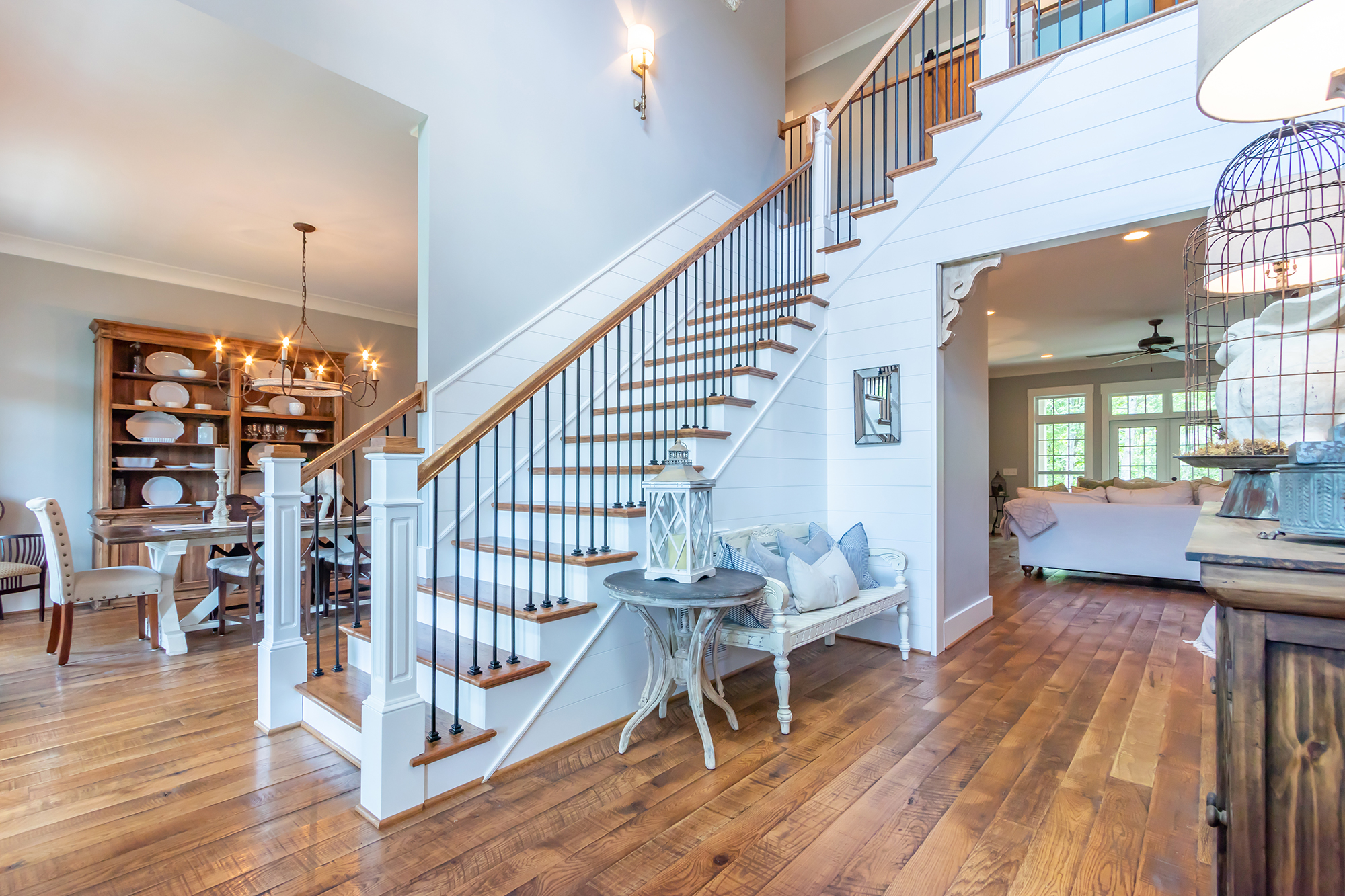
Narrow staircases are common in older Connecticut homes, and they rarely behave like the perfect examples in a showroom photo. The steps may be slightly uneven. The staircase may turn at a landing. The wall may not be perfectly straight. The width may be too tight for a standard runner but too exposed for bare stairs to feel comfortable.
That is why custom stair runners are worth considering. A properly measured runner can make stairs quieter, warmer, safer underfoot, and more finished without hiding the character of the home. At CarpetWorks, custom rug and carpet binding options can help homeowners get a runner that fits the staircase instead of forcing the staircase to accept a standard size.
Measure the full stair width first
The first measurement is the full width of the stair tread from one side to the other. This gives you the total space available before deciding how much exposed flooring should show on each side of the runner. In a narrow staircase, even a small difference in width can change how balanced the runner looks.
Many homeowners assume the runner should cover almost the full stair. That can work in some cases, but it may make narrow stairs feel crowded or heavy. A small reveal on each side often looks cleaner and more intentional. The reveal also helps show the stair material, especially if the wood is part of the home’s character.
Measure tread depth and riser height
Stair runners do not only sit on the flat step. They travel over the tread edge and down the riser, depending on the installation style. That means tread depth and riser height both matter. If these measurements are ignored, the total runner length can be wrong, especially on a full staircase.
Measure from the back of the tread to the front edge, then measure from the top of one tread down to the next. Multiply that combined measurement by the number of steps, then account for landings and installation style. It is always better to have a professional confirm measurements before ordering, because staircases can be quietly irregular from top to bottom.
Decide how much reveal you want on each side
The reveal is the exposed stair surface visible on either side of the runner. On wider staircases, there is more room to play with this. On narrow staircases, the reveal has to be chosen carefully. Too much reveal can make the runner look skinny and decorative rather than useful. Too little reveal can make the stairs feel visually squeezed.
For older CT homes, a balanced reveal often works best. It keeps the runner functional while still letting the staircase breathe. If the stairs are painted, stained, or original to the home, the reveal can become part of the design rather than dead space. The runner should look proportionate, not like a strip of carpet dropped down the middle.
Check landings, turns, and top steps
Many stair runner problems happen at landings. A straight staircase is simpler, but once there is a turn, an angled landing, or a top step that opens into a hallway, the runner needs more planning. The direction of the pattern, the placement of seams, and the way the runner turns all affect the finished look.
A landing may require a separate piece, a mitered layout, or a custom-sized section. This is one reason carpet binding and custom fabrication can matter. Instead of forcing a standard runner to bend awkwardly around the staircase, the runner can be planned in sections that look intentional and fit the space.
Think about pattern direction before choosing the carpet
Patterned runners can look beautiful on stairs, but narrow staircases are less forgiving. Stripes, borders, and geometric designs need careful alignment. If the pattern is too large, it may not repeat cleanly across each step. If the border is too wide, it can make the runner look cramped.
For narrow stairs, smaller-scale patterns, subtle textures, and clean borders are often easier to live with. The goal is to add movement without making the staircase feel busy. A professional can help you understand how the pattern will look once it bends over each tread and riser, because carpet looks different flat than it does installed on stairs.
Choose binding that suits the staircase
Binding is the finished edge of the runner, and it has a big effect on the final look. A simple bound edge can feel clean and understated. A wider or contrasting border can create a more designed look, but it needs enough stair width to feel balanced.
For narrow CT staircases, the safest visual choice is often a binding that finishes the edge neatly without stealing too much width. The binding should support the runner, not become the loudest part of the staircase. It also needs to handle foot traffic, vacuuming, and daily wear without fraying or curling.
A custom stair runner is not just about choosing a carpet. It is about measuring correctly, understanding the staircase, planning the edges, and making sure the finished piece works with daily foot traffic. Narrow stairs need extra care because every inch affects comfort, appearance, and safety.
Visit East Hartford, CT to talk with CarpetWorks about custom stair runners, carpet binding, rug options, and installation guidance. We proudly serve New Haven, Waterbury, Hartford, East Hartford, West Hartford, Middletown, and Manchester, CT and can help you plan a runner that fits your staircase properly. For measurements, product options, and next steps, contact us today.


